
Businesses, creators, and entrepreneurs often develop valuable intellectual property, but protecting it requires understanding the difference between a trademark and a copyright. Although both are forms of intellectual property protection, they protect different types of creations and serve different legal purposes.
What Is a Trademark?
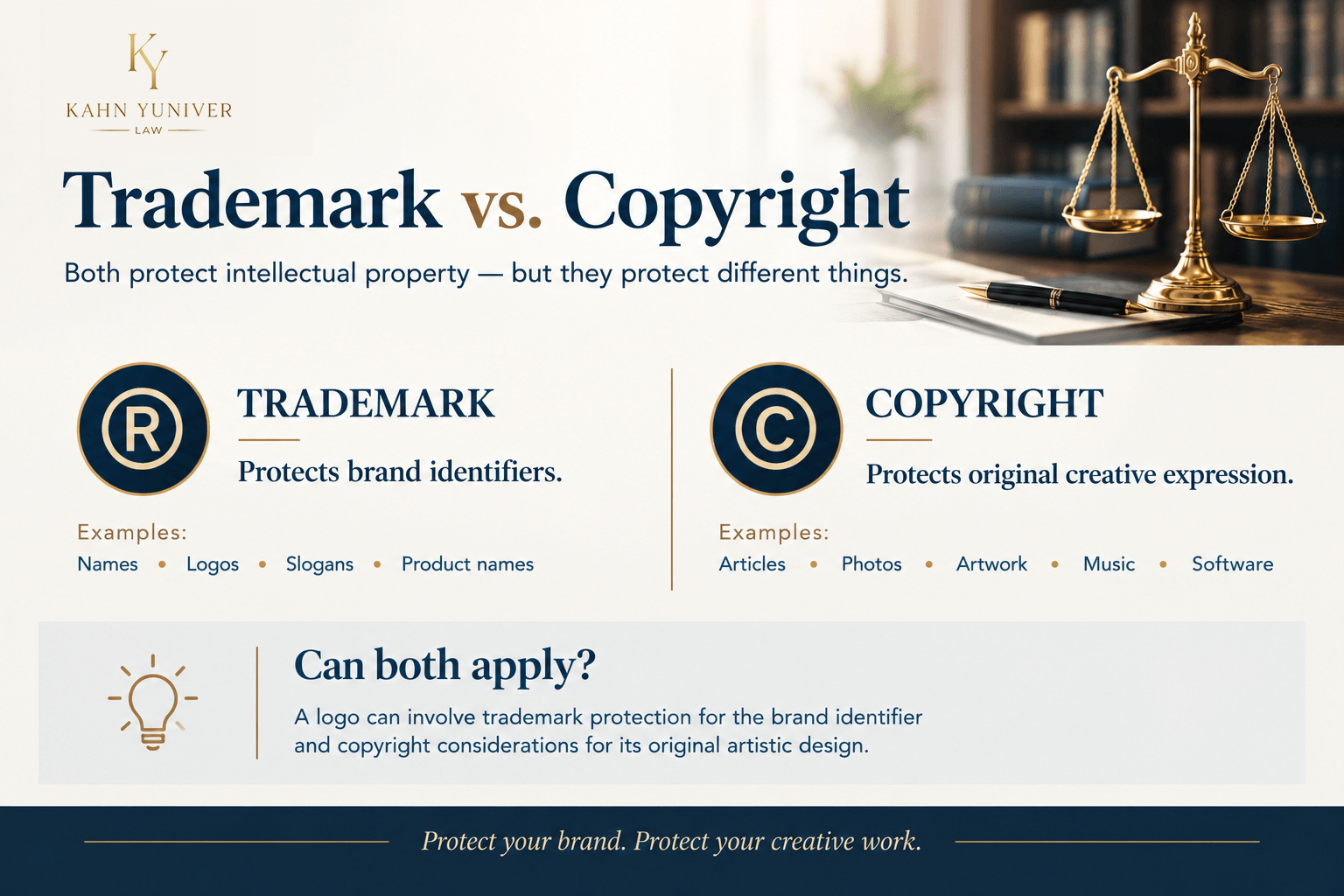
A trademark generally protects a word, phrase, symbol, design, or combination that identifies and distinguishes the source of goods or services. Examples can include a business name, logo, slogan, or brand identifier. Trademark protection is connected to the specific goods or services with which the mark is used.
Businesses may consider trademark protection for:
- Company or brand names
- Logos and symbols
- Slogans and taglines
- Product names
- Service marks
Federal trademark registration can provide broader protection, including nationwide rights associated with the registered goods or services.
What Is Copyright?
Copyright protects original works of authorship that are fixed in a tangible medium of expression. This can include books, articles, photographs, artwork, music, movies, software, and other creative works.
Copyright may give the copyright owner important exclusive rights, including rights relating to reproduction, distribution, and public performance or display, depending on the type of work.
Copyright does not generally protect an idea, fact, procedure, process, or method itself. Instead, protection generally applies to the original expression of an idea.
Trademark vs. Copyright: Key Differences
The simplest way to understand the distinction is to consider what you are trying to protect:
- Trademark: Protects brand identifiers that distinguish goods or services.
- Copyright: Protects original creative expression.
- Trademark example: A company’s name, logo, or distinctive slogan used to identify its services.
- Copyright example: Website photographs, marketing videos, original articles, graphics, or software code.
- Primary purpose: Trademark law helps distinguish the source of goods or services, while copyright law protects qualifying creative works from certain unauthorized uses.
Can Something Have Both Protections?
Yes. A single business asset can potentially involve more than one type of intellectual property protection.
For example, a company may use a distinctive logo as a trademark while the original artistic design of that logo may also raise copyright considerations. Similarly, a business website may contain trademark-protected branding and copyright-protected written content, photographs, or graphics.
Why Legal Guidance Matters
Choosing the appropriate intellectual property protection depends on the nature of the asset, how it is being used, and the rights you want to establish or enforce. Registration requirements, ownership issues, infringement concerns, and enforcement options can also vary.
Kahn Yuniver Law provides legal services that include intellectual property law and can help businesses and individuals understand their legal options.
If you are unsure whether your business name, creative work, logo, content, or other asset requires trademark or copyright protection, obtaining advice from an experienced attorney can help you evaluate the circumstances and determine appropriate next steps.
